
LifeSpan Pilates Launches Pilates Roots: A Deep Dive into the Romana LineagE
A cornerstone educational article on the history, philosophy, and living lineage of the work Joseph Pilates called Contrology.
Fact-checked, May 2026 | Primary sources listed at end of article | Part of the LifeSpan Pilates Roots Library
Search “classical Pilates” in any major city and you will find dozens of studios claiming the title. Ask what makes their teaching classical, and the answers vary widely — a weekend certification, a style preference, a teacher who once trained with someone who knew someone. The word has become one of the most searched terms in the Pilates industry and one of the least defined.
“The word ‘classical’ is everywhere right now, and we understand why people use it — it’s how students search for what they’re looking for. But the term has drifted so far from any consistent standard that it no longer tells you much. What we can tell you is what we actually are: a certified Romana’s Pilates centre, trained through the direct lineage, and held to ongoing standards by the organisation Romana’s own family leads. Pilates Roots is how we document that.”
— Tasha Norman, LifeSpan Pilates
LifeSpan Pilates, a certified Romana’s Pilates International (RPI) centre in Midtown Manhattan, has launched Pilates Roots — a growing educational archive at lifespanpilates.com/roots — to document what the Pilates method actually contains: where it came from, how it was preserved, what a genuine apprenticeship requires, and why the difference between a lineage and a label matters to anyone serious about the work.
At LifeSpan Pilates, we approach this work through a specific and documented lens: the direct lineage running from Joseph Pilates to his primary protégée, Romana Kryzanowska — and from Romana to her daughter Sari Mejia Santo, who trained with Joseph Pilates herself, and on to Sari’s daughter Daria Pace. This is not a lineage that
was documented and archived. It is a lineage that is still breathing.When you step into this work through LifeSpan, you are not simply engaging in a workout. You are inheriting a legacy, entering an educational archive, and participating in a tradition of teacher-to-teacher transmission that has safeguarded the integrity of this method across three generations of the same family
In This Article:
Joseph Pilates and Contrology
A System, Not a Collection of Exercises
The Complete Apparatus System
The Six Principles
Romana's Teaching Legacy
The Apprenticeship Tradition
The Roots Continue at LifeSpan Pilates
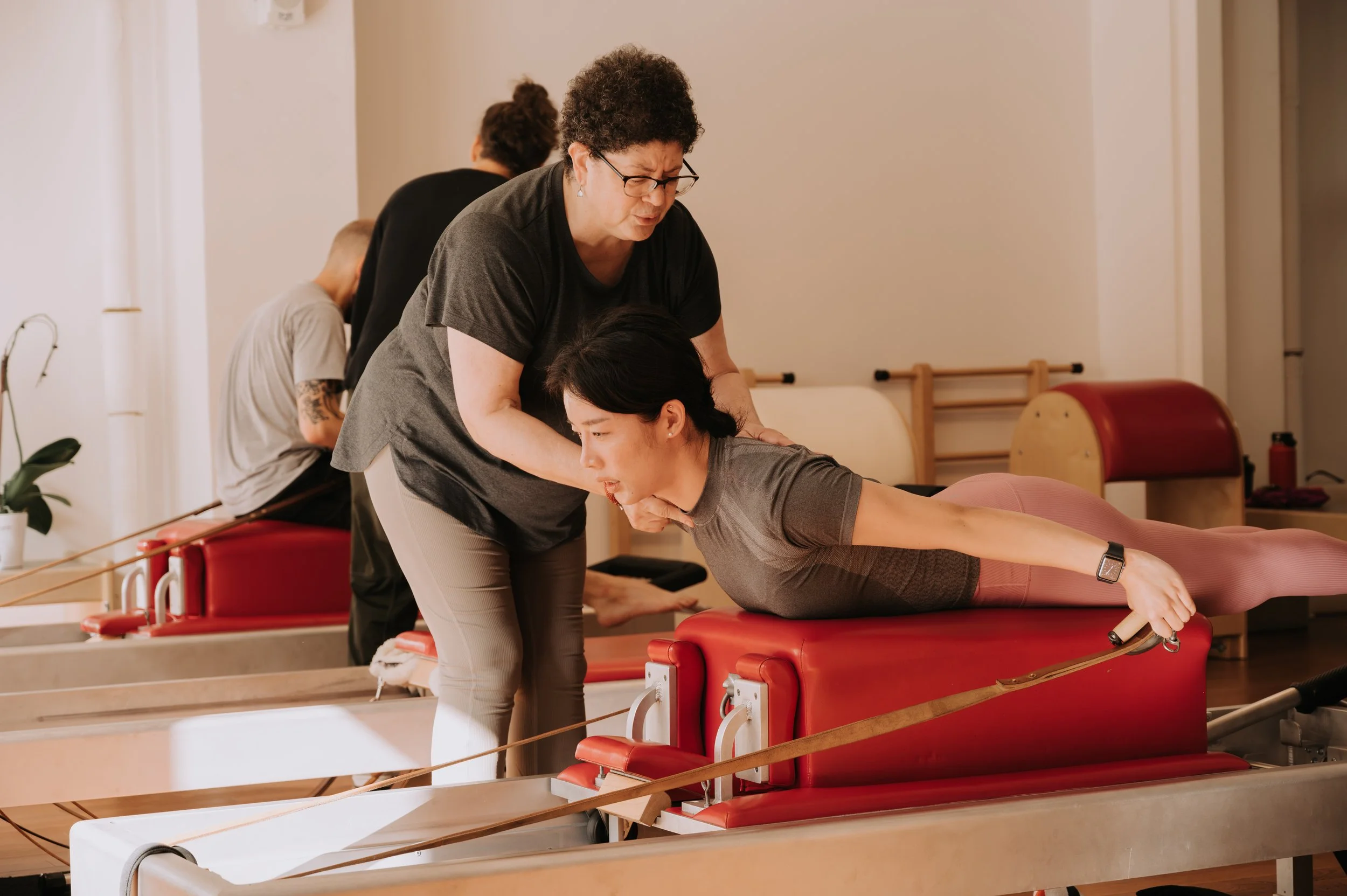
Joseph Pilates and the Method He Called Contrology
Historical context
Joseph Hubertus Pilates was born on December 9, 1883, in Mönchengladbach, Germany. He was a sickly child — plagued by asthma, rickets, and rheumatic fever — whose early determination to overcome physical weakness would define the rest of his life. His father was a prize-winning gymnast and his mother a naturopath, and the combination of those influences shaped a man who viewed the body as something to be understood, trained, and respected on its own terms.
He taught himself through bodybuilding, gymnastics, boxing, diving, skiing, and a rigorous study of both Eastern and Western philosophies of movement. When he moved to England in 1912 and was interned during World War I, he began formalizing his system for fellow internees — including the earliest spring-based rehabilitation equipment, fashioned from bed springs. By the time he arrived in New York City with his wife Clara in 1926 and opened their studio at 939 Eighth Avenue, the method was already decades in development.
Joseph Pilates died on October 9, 1967, at the age of 83. He is reported to have said: “When I am dead they will say Pilates was right.” He was.
→ Explore Further: What Is Contrology?
Why it matters
Long before the word “Pilates” became a household fitness term, the movement system had a completely different name: Contrology. Joseph Pilates defined Contrology as the complete coordination of body, mind, and spirit. He did not design exercises to burn calories or fatigue individual muscle groups. He engineered a sophisticated system of physical and mental conditioning intended to return the human body to its natural state of balance, rhythm, and inherent powe
““Contrology develops the body uniformly, corrects wrong postures, restores physical vitality, invigorates the mind, and elevates the spirit.”
— Joseph Pilates, Return to Life Through Contrology (1945)
His vision was for every body to become its own teacher through consistent, disciplined practice. Contrology develops the deep stabilising muscles of what he called the “powerhouse” — the foundational engine of the body from the base of the ribs to the top of the pelvis. By prioritising internal control over external appearance, the method transforms how the nervous system communicates with the muscular structure.
A note on the name
Joseph Pilates never trademarked his method. He called it Contrology. The word “Pilates” as a descriptor for his system emerged organically during his lifetime, and in 2000 a U.S. federal court confirmed that “Pilates” is a generic term — like yoga or karate — that cannot be owned by any individual or organisation. The method belongs to everyone who practises and teaches it honestly.
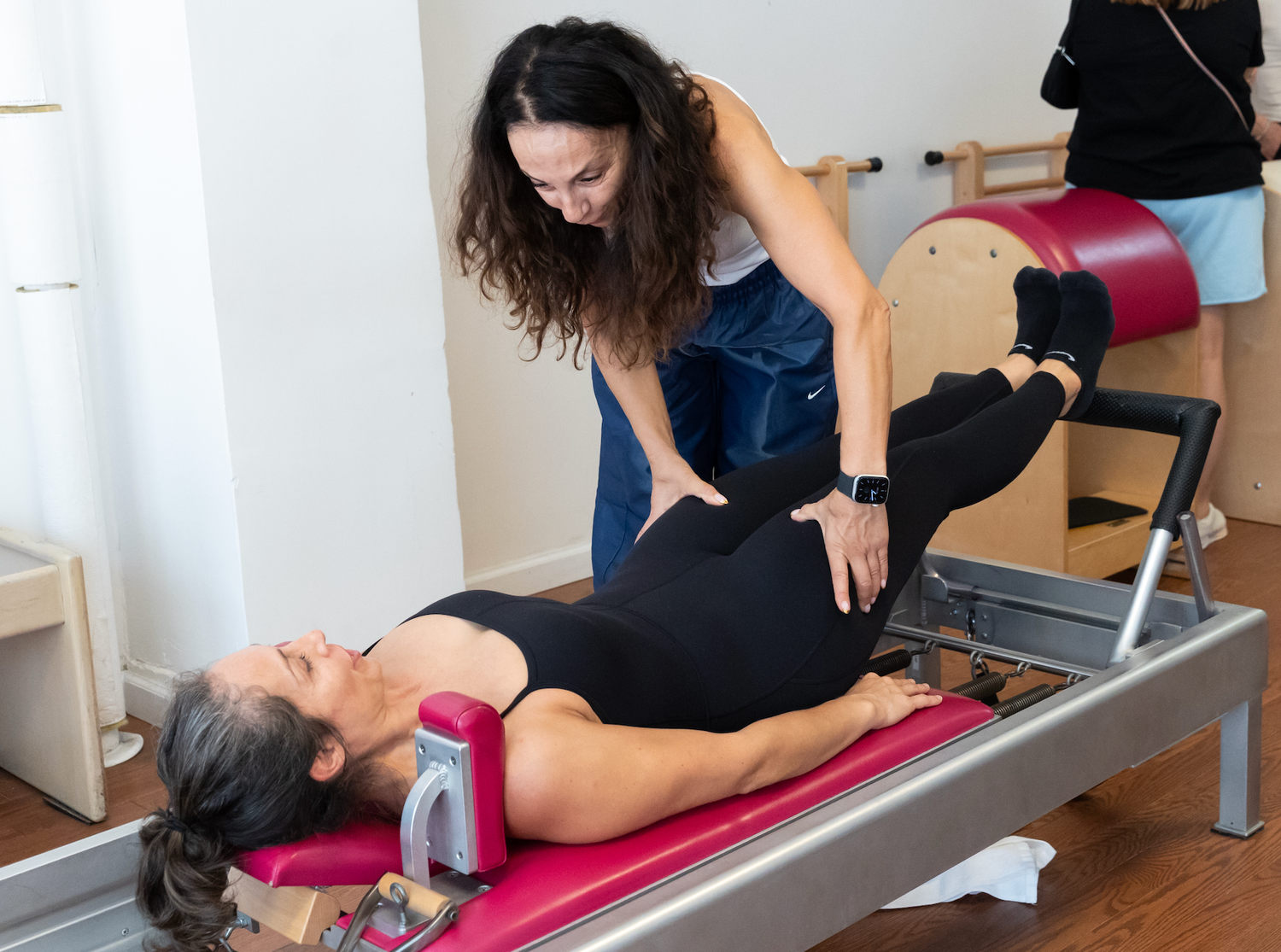
A System, Not a Collection of Exercises
Historical context
The modern fitness landscape frequently treats Pilates as a menu — a catalogue from which an instructor can pick and choose movements, rearranging them to satisfy a desire for novelty or to accommodate a trend. In the original method, this approach fundamentally breaks the mechanism of the work.
Contrology is a strict, logical system with an architectural blueprint. The exercises are organised in a precise, deliberate sequence. Every movement is a prerequisite for the one that follows, systematically warming up the spine, articulating the joints, challenging the powerhouse in different planes of motion, and returning the body to a state of integration and calm.
→ Explore Further: Why the Order Matters
Why it matters
This sequence is known as the order of the exercises. The order is not flexible, nor is it a relic of history to be discarded for variety. It is a brilliant physiological progression — the result of a lifetime of observation by a man who studied how human bodies actually move, compensate, and heal.
When you honour the order, the method becomes its own diagnostic tool. Gaps in strength, asymmetries in alignment, and structural compensations are instantly revealed and progressively corrected. The exercises work on each other. Remove one, change the sequence, or perform them in isolation, and you are no longer practicing Contrology — you are practising something else that may carry the same name.
Common Misunderstandings
It is sometimes said that the order “doesn’t matter for beginners” or that it can be rearranged to “make it more interesting.” This misreads what the order is. It is not a preference. It is a physiological prescription that holds regardless of experience level. Modifications exist for every body and every limitation within the system. The sequence itself does not change.
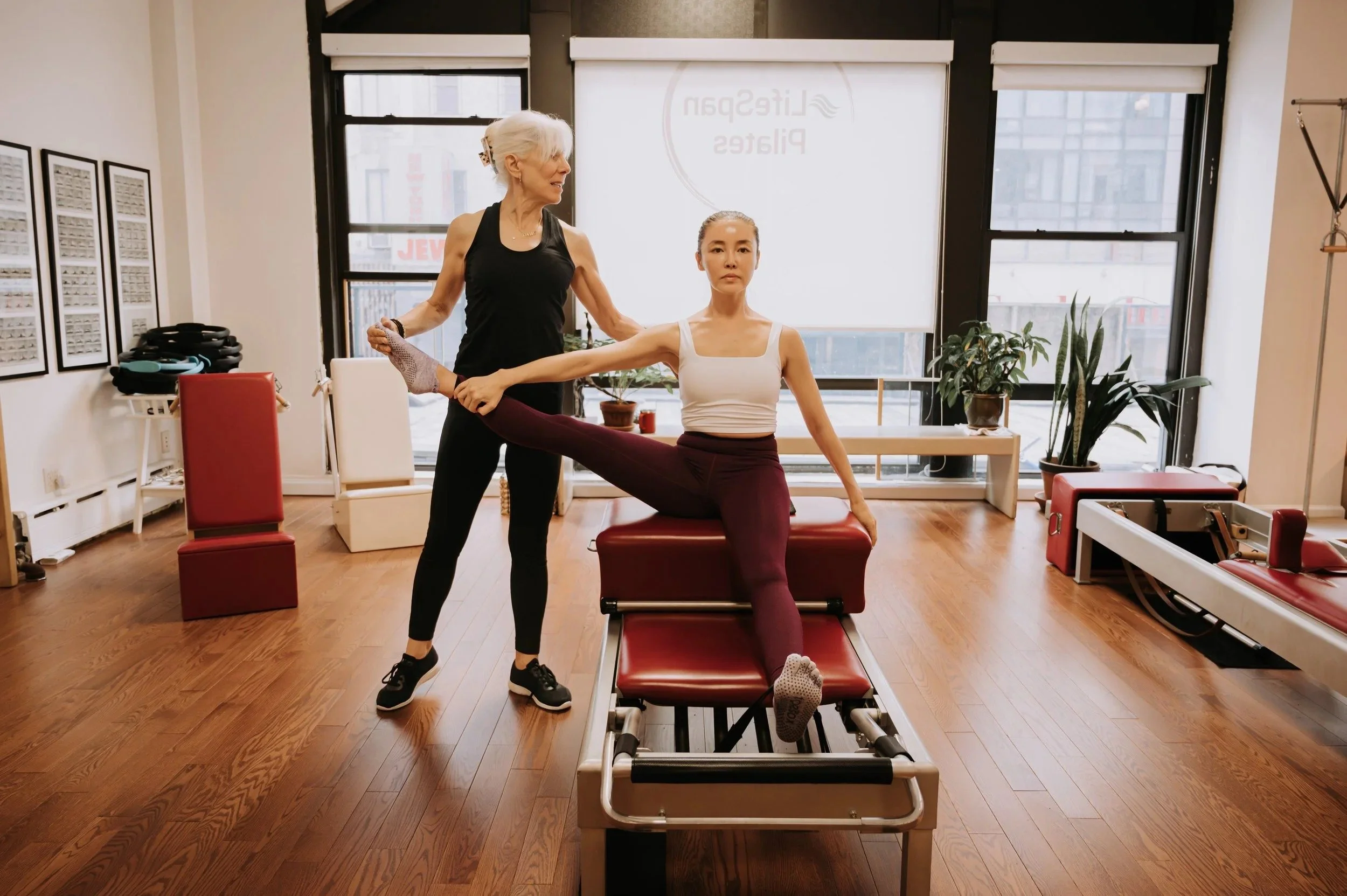
The Complete Apparatus System
Historical context
Joseph Pilates was not only a movement innovator — he was a prolific inventor, holding more than 26 apparatus patents during his lifetime. He did not design his equipment as standalone exercise machines. He built a complete, integrated apparatus system in which each piece was engineered to interact with the others.
The Reformer, the Cadillac, the Wunda Chair, the Electric Chair, the Barrels, the Spine Corrector, and the smaller auxiliary equipment each have a specific role within the whole. They are not interchangeable options on a menu. They are instruments in an orchestra — and a lineage-trained instructor is the conductor who knows when to bring each instrument forward.
→ Explore Further: The Original Apparatus System
Why it matters
A structural or movement deficiency observed on the Reformer is not addressed by endless repetitions on the same machine. A properly trained instructor within this lineage knows exactly which exercise on the Wunda Chair or Spine Corrector will isolate, support, and correct that specific physical pattern. This cross-apparatus intelligence is one of the defining marks of a teacher who has completed the full apprenticeship process. This is why LifeSpan Pilates maintains a complete set of original-style Gratz apparatus. Gratz Industries was Joseph Pilates’ own manufacturer. The proportions, spring tensions, and dimensions of Gratz equipment are calibrated to the original method. To teach on equipment that deviates significantly from these specifications is to change the resistance, the geometry, and ultimately the experience of the work — while calling it the same thing.
Common Misunderstandings
Many contemporary studios offer “Reformer Pilates” as though the Reformer is the entirety of the method. In the original system, the Reformer is one instrument in a complete orchestra. Practising only on the Reformer is like learning only the melody of a symphony — you receive something real, but not the whole composition.

The Six Principles
HISTORICAL CONTEXT
Joseph Pilates never formally published a numbered list of principles. The Six Principles — Concentration, Centering, Control, Breathing, Precision, and Flow — were formally codified in The Pilates Method of Physical and Mental Conditioning (1980) by Philip Friedman and Gail Eisen, two students of Romana Kryzanowska. Published more than a decade after Joe’s death, it was the first modern book on the method. Friedman and Eisen distilled Joe’s teachings into six organising principles to make the work accessible to a wider audience. The principles are entirely grounded in Joe’s own writings and teaching philosophy — but the act of naming and numbering them belongs to this generation within his lineage.
This is worth understanding because it illustrates how the lineage has always worked: not one person holding all knowledge in isolation, but a chain of devoted students making the work more transmissible while remaining anchored to what they received.
WHY IT MATTERS
The Six Principles are not rules to follow sequentially. They are qualities to cultivate simultaneously — present in every exercise, on every apparatus, in every session. Think of them as the strings of a chord. The moment one is dropped, the sound changes.
Concentration. The mind must be present and actively directing the movement. Mindless repetition does not produce change. Only conscious, directed movement rewires the neuromuscular system.
Centering. All movement initiates from the powerhouse — the deep core from the base of the ribs to the top of the pelvis. When the centre is stable, the extremities move with freedom and precision. This is not metaphor. It is anatomy.
Control. Contrology translates as the study of control. No movement is performed with momentum, gravity, or habit. Every inch of every exercise is governed by muscular control. This is what distinguishes the method from exercise — it demands mastery, not just effort
Breathing. Joseph Pilates described breathing as the internal shower of the body and believed that forced, full exhalation was the foundation of good health. Each exercise carries a specific breathing pattern to maximise oxygenation and engage the deep abdominal musculature.
Precision. There are no approximate exercises in this method. Every position, every transition, every point of the body in space has a specific and intentional placement. Precision is the difference between stimulating the correct tissue and reinforcing a compensation.
Flow. The exercises move from one to the next with economy and rhythm. Flow is not speed. It is the quality that comes from genuine mastery — when effort disappears and the body moves as a unified whole.
For a deeper exploration of each principle and its historical context, visit: lifespanpilates.com/roots/the-six-principles
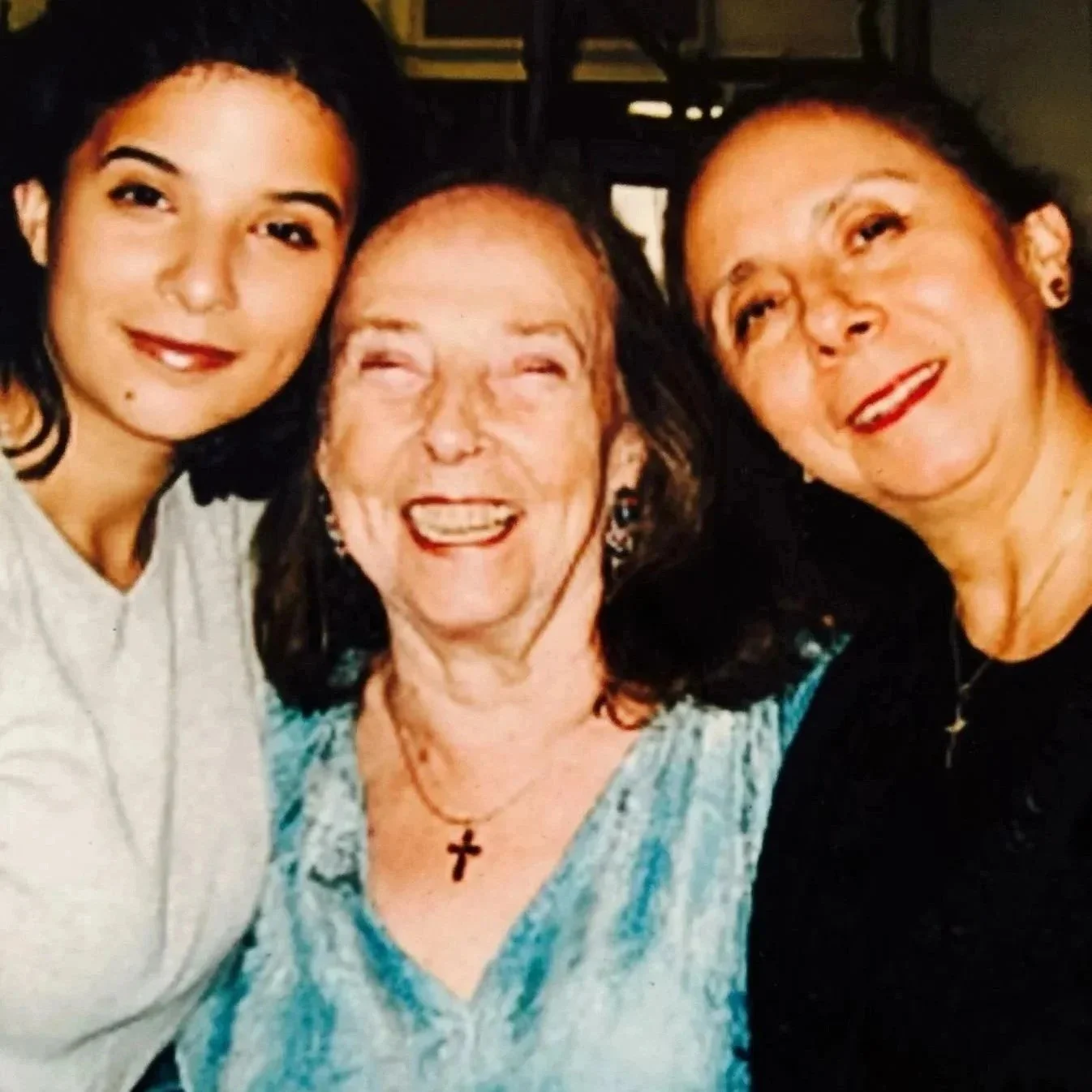
The First Generation: Joseph Pilates and His Students
HISTORICAL CONTEXT
Joseph Pilates did not establish a formal certification programme during his lifetime. He taught the way craftspeople have always taught — through proximity, demonstration, correction, and the slow accumulation of understanding that only comes from working directly alongside a master. The people who received this transmission directly became known, in the years after his death, as the Pilates Elders.
The Elders — among them Romana Kryzanowska, Ron Fletcher, Kathy Grant, Eve Gentry, Carola Trier, Lolita San Miguel, and Mary Bowen — each carried forward what they had learned in their own way. Each brought a different background, a different period of study, and a different relationship with the work. The Pilates community owes an enormous debt to all of them. Without their commitment to teaching and transmitting what they had received, the method would not exist in any living form today.
Their individual lineages reflect their individual relationships with Joe. Some emphasised therapeutic application. Some integrated backgrounds in dance or somatic work. Some stayed closer to the original sequence and apparatus system. These are not contradictions. They are the natural result of a method taught by a man who met each student exactly where they were.
What distinguished romana’s relationship with joseph pilates
Within this remarkable group, Romana Kryzanowska’s relationship with Joseph Pilates was distinguished by one factor above all others: time.
Romana worked alongside Joseph Pilates longer than any other elder. She was introduced to him in 1941 — referred by her mentor, the celebrated choreographer George Balanchine, following an ankle injury that threatened her ballet career. She did not simply recover and move on. She stayed. She became a studio helper, then a teacher, then the person Joe and Clara trusted with the work itself.
In 1944 she married and moved to Peru, but maintained close contact with Joe and Clara throughout — continuing to teach the method and visiting the studio when she could. She returned to New York in 1958 and worked at Joe’s side until his death in 1967, then at Clara’s side until Clara’s death in 1977. In 1970 she became director of what was then called The Pilates Studio. She taught, travelled, and certified instructors for more than six decades. She died on August 30, 2013, at the age of 90.
Jay Grimes, a first-generation elder who trained with Joe, Clara, and Romana, said of her: “Technically, nobody knows Joseph Pilates’ work better than Romana Kryzanowska. She embodies the true Pilates spirit.”
This is not a claim of superiority over the other elders. It is a statement about the nature of what was transmitted — and the reason the Romana lineage carries the most complete and least modified version of the original system. Depth of immersion produces depth of understanding. That is true in any discipline.
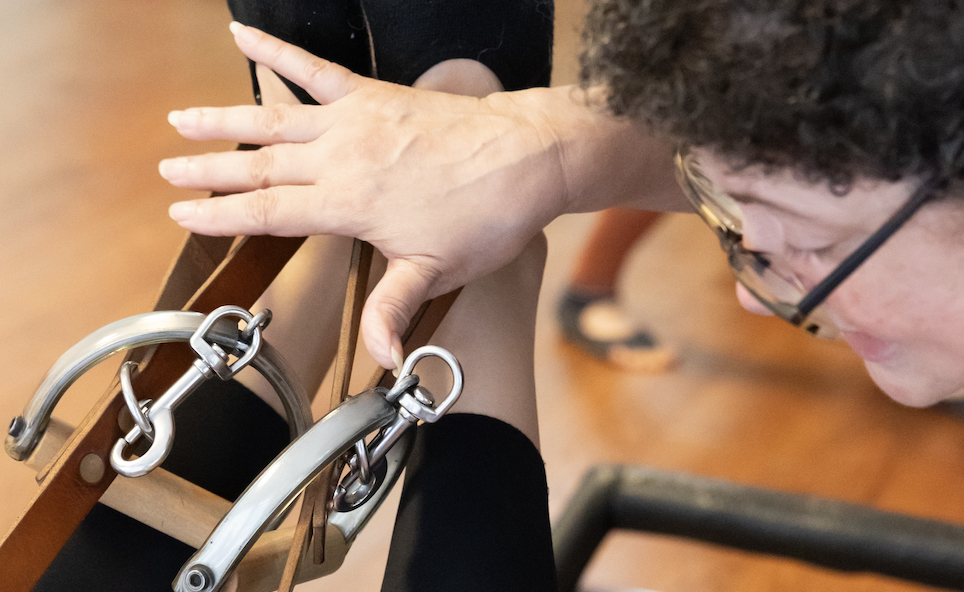
Romana’s Teaching Legacy
HISTORICAL CONTEXT
Romana Kryzanowska was born on June 30, 1923, in Farmington, Michigan. She came from an artistic family, studied ballet from a young age, and by her teens was training at George Balanchine’s School of American Ballet in New York City. It was there, in the early 1940s, that she suffered the ankle injury that would alter the course of her life — and, though she could not have known it then, the course of the Pilates method itself. Balanchine — a personal friend of Joe’s whose dancers regularly worked with him for rehabilitation and conditioning — took Romana to the studio himself. The exercises worked. She stayed. Before long, she recalled, “I was named a helper, which meant I didn’t have to pay anymore.”
why it matters
Romana did not modernise the method to make it more palatable. She did not adapt it for trends or soften it for commercial appeal. She preserved it because she understood that what Joe had created was already complete — that the intelligence was already there, waiting to be understood more deeply, not revised.
What she transmitted was not a collection of exercises. It was a way of seeing the body, a philosophy of movement, and a set of standards for what a properly trained teacher must understand before standing in front of a client. She preserved the order, the spring tensions, the cueing language, the pace, the intelligence of the apparatus system, and above all the uncompromising belief that this work, done correctly, transforms bodies and lives.
As Cathy Strack documents in Love All Around: The Romana Kryzanowska Biography (Pilates Projects LLC, 2019) — the definitive biography of Romana, meticulously researched with 688 endnotes — her commitment to the work was not sentimental. It was principled. She understood that without disciplined transmission, a method does not evolve. It dissolves.
→ Related Reading: Romana’s Teaching Legacy
COMMON MISUNDERSTANDING
It is sometimes suggested that fidelity to the Romana lineage means rigidity — an inability to meet individual clients where they are. This misreads what the lineage teaches. Romana was renowned for her ability to meet each student exactly where they were: finding the precise modification, the exact spring tension, the perfect progression for every body. The method is adaptive. The principles are not. Honouring the lineage means understanding the work deeply enough to apply it intelligently to each unique human being.
HOW LIFESPAN PRESERVES IT
LifeSpan Pilates teaches within the Romana lineage. Our instructors are trained and certified through the direct teacher-to-teacher chain that runs from Joe to Romana to the current custodians at Romana’s Pilates International. When you work with a LifeSpan instructor, you are working with someone held to the standards Romana enforced — standards of knowledge, physical understanding, and teaching integrity that take years to earn.

A Lineage That Is Still Breathing: Sari, Daria, and the Living Chain
what makes this lineage singular
Every elder lineage is a legitimate thread back to Joseph Pilates. That must be said clearly and honestly. The Pilates community is richer for the diversity of what the elders carried forward, and the work each lineage does to preserve and transmit what it received is worthy of respect. But there is something about the Romana lineage that no other elder lineage can claim in 2026: the living biological and pedagogical chain from Joseph Pilates has not been broken. It runs through people who are alive, who are teaching, and who are actively certifying the next generation of instructors.
Sari Mejia Santo — Romana’s daughter and a Grand Master Instructor Trainer at Romana’s Pilates International — did not simply inherit the work through her mother. She trained directly with Joseph and Clara Pilates herself as a young girl in the studio. As a child she suffered severe physical complications from rheumatic fever, and Romana — already an accomplished instructor — used the method to rebuild her daughter’s body. Sari later worked alongside Joe directly and became an instructor under his guidance. Joseph Pilates called her and her brother his “Pilates babies.” This means Sari’s connection to the work runs not only through Romana but directly through Joe himself. The chain from Joseph Pilates to the person currently leading Romana’s Pilates International passes through a single generation — not two, not three. One.
Daria Pace — Sari’s daughter and Romana’s granddaughter — continues this transmission now, overseeing the international training programme and carrying the work into a third generation of the same family.
Ron Fletcher, Kathy Grant, Eve Gentry, Carola Trier — all gone. Their lineages continue through the teachers they trained, and those teachers are doing important work. But in every case, the living thread to Joe has passed through at least one full generation of distance. In the Romana line, because Sari worked with Joseph Pilates directly, that thread has not. That is not rhetoric. It is chronology.
At LifeSpan Pilates, we are a certified centre within the Romana’s Pilates International network. Our connection to Sari and Daria is active and ongoing — not historical. When standards evolve, when questions arise, when the work needs to be tested against its source, that source is reachable. Not archived. Reachable.
what this means for students and teachers
For students: when you train at LifeSpan, you are not studying a preserved version of something that once existed. You are studying something that is still alive in the hands of the people who hold it closest to the original.
For teachers and apprentices considering where to train: the lineage you choose is the lineage you will transmit. Proximity to the source matters — not because other lineages are lesser, but because closeness to the origin carries the most complete and least mediated version of what Joe built.
“Students come to us having searched ‘classical Pilates New York’ and found fifteen options. Pilates Roots exists so they can understand what to actually look for — what an apprenticeship involves, what the lineage means, what it looks like when someone has genuinely trained in this method versus borrowed the language of it.”
— Tasha Norman, LifeSpan Pilates

The Apprenticeship Tradition
HISTORICAL CONTEXT
Joseph Pilates did not issue weekend certifications. He taught by working alongside people — correcting them, demonstrating on them, and allowing them to absorb the work through sustained, direct exposure over years. This was apprenticeship in its oldest and most rigorous sense: the transmission of a craft from master to student through proximity, observation, repetition, and correction.
Romana Kryzanowska maintained this model throughout her teaching life. The Romana’s Pilates International training programme — now led by Sari Mejia Santo and Daria Pace — continues it today. To be certified in this lineage is not a matter of completing a curriculum on paper. It is a matter of accumulating genuine understanding through structured stages of immersion that cannot be abbreviated.
how the apprenticeship works
Foundational seminars. The first stage establishes theoretical and practical knowledge of the exercises, their names, their sequences, their modifications, and the principles that govern them across all apparatus.
Observation hours. The apprentice watches experienced instructors teach real clients. They learn to see — to identify compensations, track the quality of movement, and understand how a skilled teacher makes real-time adjustments for each unique body.
Practice teaching. Under supervision, the apprentice begins teaching, receiving direct correction and guidance from their mentor. The eye and the voice develop simultaneously.
Mentorship. An ongoing, deepening relationship with a senior teacher who holds the apprentice to the standards of the lineage throughout the entire process — not just during formal sessions.
Examination and certification. The apprentice demonstrates their knowledge and skill in a formal evaluation. Certification in this lineage is earned, not issued.
This process takes approximately 800 hours of structured study — typically a year or more. That is not a flaw in the system. It is the design. The method is complex enough that any shorter timeline produces teachers who know the shape of the exercises without understanding the architecture beneath them.
COMMON MISUNDERSTANDING
Many certification programmes today are structured as curricula: complete these modules, pass these tests, receive this certificate. The apprenticeship model is fundamentally different. The goal is not to transmit information — it is to transmit understanding. Information can be delivered in a weekend. Understanding requires time, repetition, correction, and sustained proximity to both the work and a senior teacher.
HOW LIFESPAN PRESERVES IT
LifeSpan Pilates is the only certified Romana’s Pilates International training centre in New York City. Our instructors have completed the full apprenticeship process within the lineage, and all maintain current RPI certification through annual continuing professional education — an ongoing requirement that distinguishes an active lineage centre from one that trained within the tradition at some point but no longer maintains a live relationship with it. For those interested, our Teacher Training page for current program details.
The Roots Continue at LifeSpan Pilates
Everything described in this article — the philosophy of the method Joe called Contrology, the logic of the order of exercises, the intelligence of the complete apparatus system, the Six Principles codified from his teachings, the depth of transmission through Romana, the living chain through Sari and Daria, and the rigour of the apprenticeship tradition — is alive and active at LifeSpan Pilates.
We are not a studio that offers Pilates as one fitness option among many. We are an institution dedicated to the preservation, documentation, and transmission of this method in its original integrity. Our Pilates Roots project is an ongoing educational archive: a growing library of articles, histories, and teaching resources designed to make the depth of this work accessible to students, practitioners, teachers, and researchers at every stage of their journey.
LifeSpan Pilates is part of a global network of Romana’s Pilates International certified centres — from RPI’s headquarters in Florida led by Sari Mejia Santo and Daria Pace, to sister centres in Chicago, Australia, South America, Europe, the Netherlands, and beyond. We stand together in the conviction that the sun should never set on an honest and complete transmission of this work.
The work is not fragile. It has survived because people chose, generation after generation, to preserve it faithfully rather than improve it for convenience. That is what we are committed to at LifeSpan.
Reflection
There is something quietly radical about choosing to go back to the source in an era that rewards novelty above almost everything else. The method Joseph Pilates built is nearly a century old. And yet, when it is taught correctly — with the order intact, the principles alive, the apparatus system complete, the lineage honoured, and the apprenticeship process rigorously followed — it is not a relic. It is a living system that continues to reveal new layers of intelligence the deeper you go.
Joseph Pilates believed his work was fifty years ahead of its time. Romana Kryzanowska believed it was worth protecting regardless of what the market preferred. Sari Mejia Santo and Daria Pace carry that protection forward now. At LifeSpan Pilates, we believe this work is worth understanding — fully, historically, and with the kind of depth that only comes from returning, again and again, to the roots.
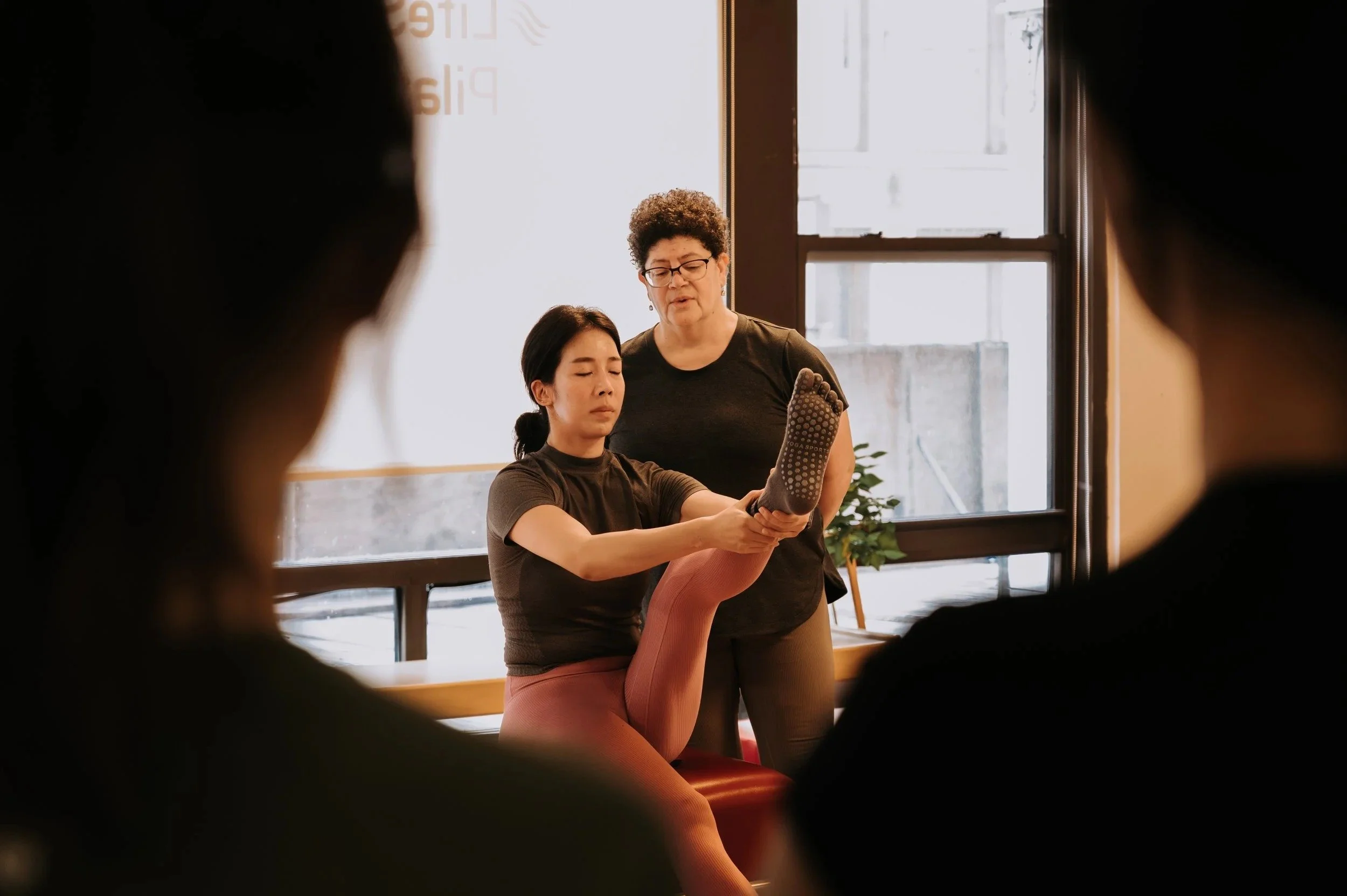
Sources & Further Reading
All factual claims in this article have been verified against multiple independent primary and secondary sources. Inline attributions appear in the body text where specific facts or direct quotations are referenced. The following are recommended for readers who wish to go deeper.
Primary sources - joseph pilates’ own writings
Pilates, J.H. Your Health: A Corrective System of Exercising That Revolutionizes the Entire Field of Physical Education. Christopher Publishing House, 1934.
Pilates, J.H. Return to Life Through Contrology. J.J. Augustin, 1945.
Gallagher, S.P. & Kryzanowska, R. (Eds.) The Complete Writings of Joseph H. Pilates — The Authorized Editions. Bainbridge Books, 2000. [The only edition authorized by the Pilates Studio in New York City.]
the six principles - original source
Friedman, P. & Eisen, G. The Pilates Method of Physical and Mental Conditioning. Doubleday, 1980. [The first modern book on the method; the original source for the codified Six Principles.]
biographical research
Strack, C. Love All Around: The Romana Kryzanowska Biography. Pilates Projects LLC, 2019. [Meticulously researched with 688 endnotes; the definitive biography of Romana Kryzanowska.]
Strack, C. Get to Know Joe Pilates. Pilates Projects LLC, 2022. [Comprehensive biography of Joseph Pilates drawing on primary sources and interviews with people who knew him personally.]
historical archive
Gallagher, S.P. & Kryzanowska, R. The Joseph H. Pilates Archive Collection: The Photographs, Writings and Designs. Bainbridge Books, 2003. [Photographs, apparatus blueprints, and original studio documents compiled with Romana’s direct involvement.]
lineage and certifications
Romana’s Pilates International. romanapilatesinternational.com — The official organisation for Romana’s Pilates certification, currently led by Sari Mejia Santo and Daria Pace.
Pilates Anytime Legacy Project. pilatesanytime.com/legacy — A comprehensive documentary archive covering all first-generation Pilates elders, their histories, and their lineages.
Continue Exploring Pilates Roots
© LifeSpan Pilates | lifespanpilates.com/roots | Part of the Pilates Roots Educational Archive
This article may be shared for educational purposes with full attribution to LifeSpan Pilates and a link to the original URL.