
What the Pilates Apparatus Is Actually For?
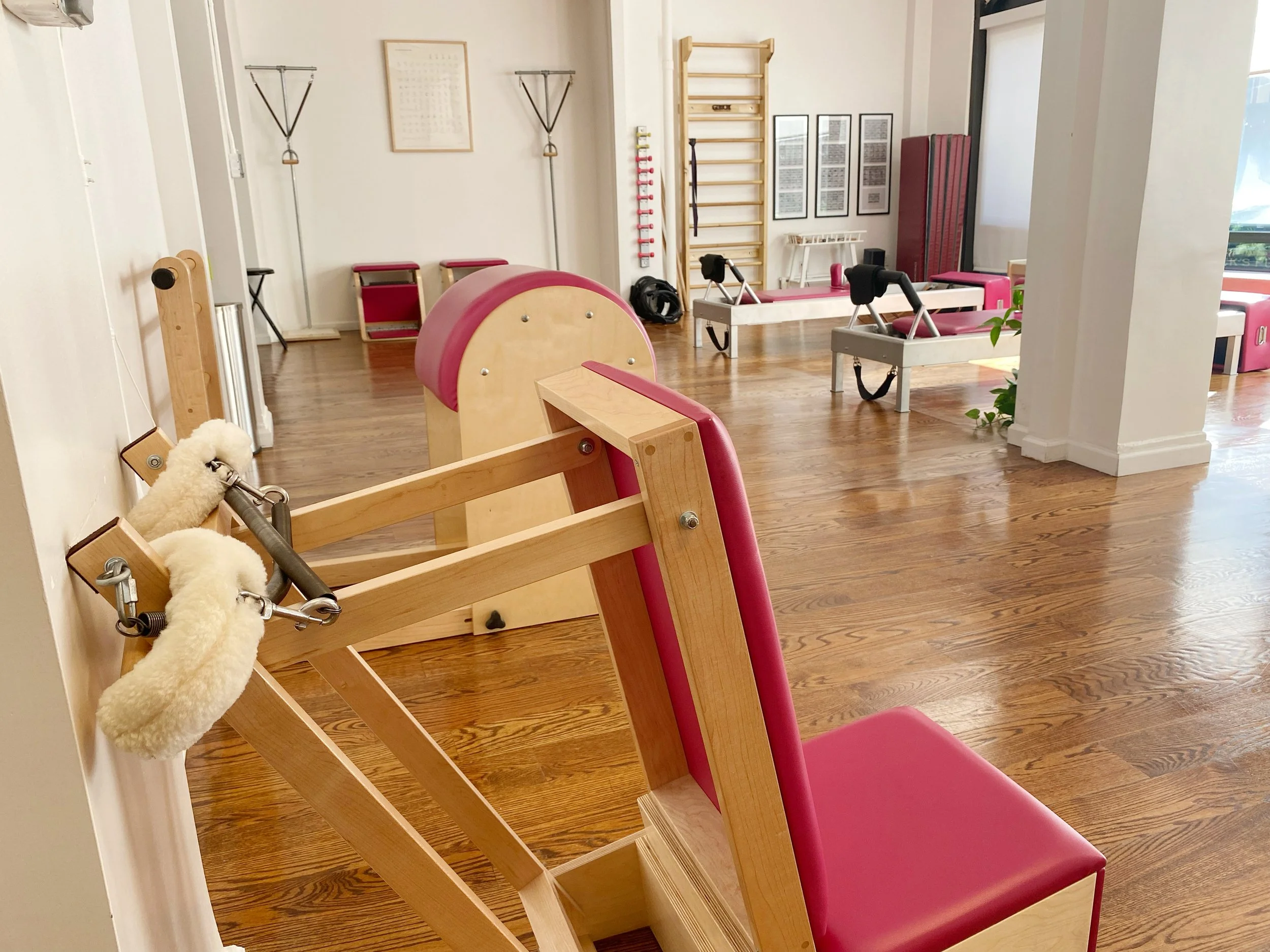
LifeSpan Pilates Studio
You walk into a Pilates studio for the first time and there it is — a bed-like frame with springs, straps, a sliding carriage, and a foot bar. Next to it, something that looks like a high chair designed by an engineer. Against the wall, a series of curved foam arches. None of it looks like anything you've used before. None of it looks familiar. And if no one has explained any of it to you, your first instinct might be to turn around and go find a yoga class.
You're not alone. The Pilates apparatus stops people before they even begin. And that's a shame — because what sits inside a well-equipped Pilates studio is some of the most intelligent movement equipment ever designed. Not intimidating. Intelligent.
This post is your orientation. By the end, you'll understand exactly what the apparatus is for, why it works, and why your first session with the right teacher will change the way you think about your body.
Part 1: Why People Feel Intimidated by the Apparatus
Let's be honest about what the apparatus looks like to someone who's never used it.
The reformer — the long, spring-loaded platform that's become the signature image of Pilates — looks like it belongs in a physical therapy clinic. And, The High Chair, commonly called The Electric Chair. Or possibly, The Wunda Chair, with its pedal and spring system, depending on who you ask looks industrial. The spine corrector and arc barrel look like props from a contemporary dance rehearsal.
And then there's the sheer quantity of it. A fully equipped Pilates studio can feel overwhelming — so many pieces, so many springs, so many attachments and boxes and handles. If you're used to a gym where the machines have diagrams and instructions bolted onto the side, the apparatus offers no such comfort.
The intimidation is real. But here's what's important to understand: the apparatus wasn't designed to challenge you. It was designed to support you.
That distinction is everything.
Part 2: What the Apparatus Actually Does
Joseph Pilates, who created this system in the early 20th century, designed the apparatus with a specific philosophy in mind: resistance and assistance working together. Unlike a weight machine that simply adds load, the Pilates apparatus does something far more nuanced. It creates a responsive environment — one that can challenge you when you're capable and support you when you're not.
Here's how to think about each major piece:
The Reformer
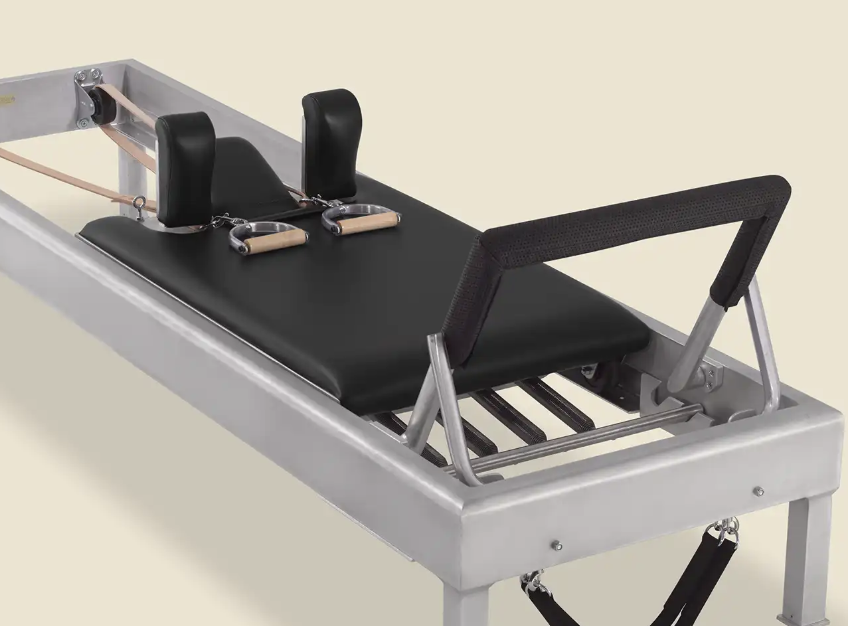
The spring resistance supports your body through movements it might not yet be strong enough to perform on its own — and it challenges you to control the movement as you return.
Photo: courtesy of Gratz Pilates
The reformer is the backbone of the Pilates apparatus system. It's a carriage that slides along a frame, connected to springs of varying resistance. You can lie on it, sit on it, kneel on it, stand on it. You can push through the footbar or pull through the straps. The spring resistance supports your body through movements it might not yet be strong enough to perform on its own — and it challenges you to control the movement as you return.
Think of it this way: if performing a squat on the floor requires your body to be strong enough to lower and raise itself entirely under gravity, the reformer can take some of that load through the springs, allowing you to feel the correct mechanics of the movement before you have the full strength to execute it independently. It teaches your body the pattern first.
The reformer also gives your teacher immediate feedback. If something is off — a hip hiking, a shoulder collapsing, a breath held — the spring resistance makes it visible. There's nowhere to hide, which sounds intimidating but is actually deeply useful. You learn faster.
The Wunda Chair
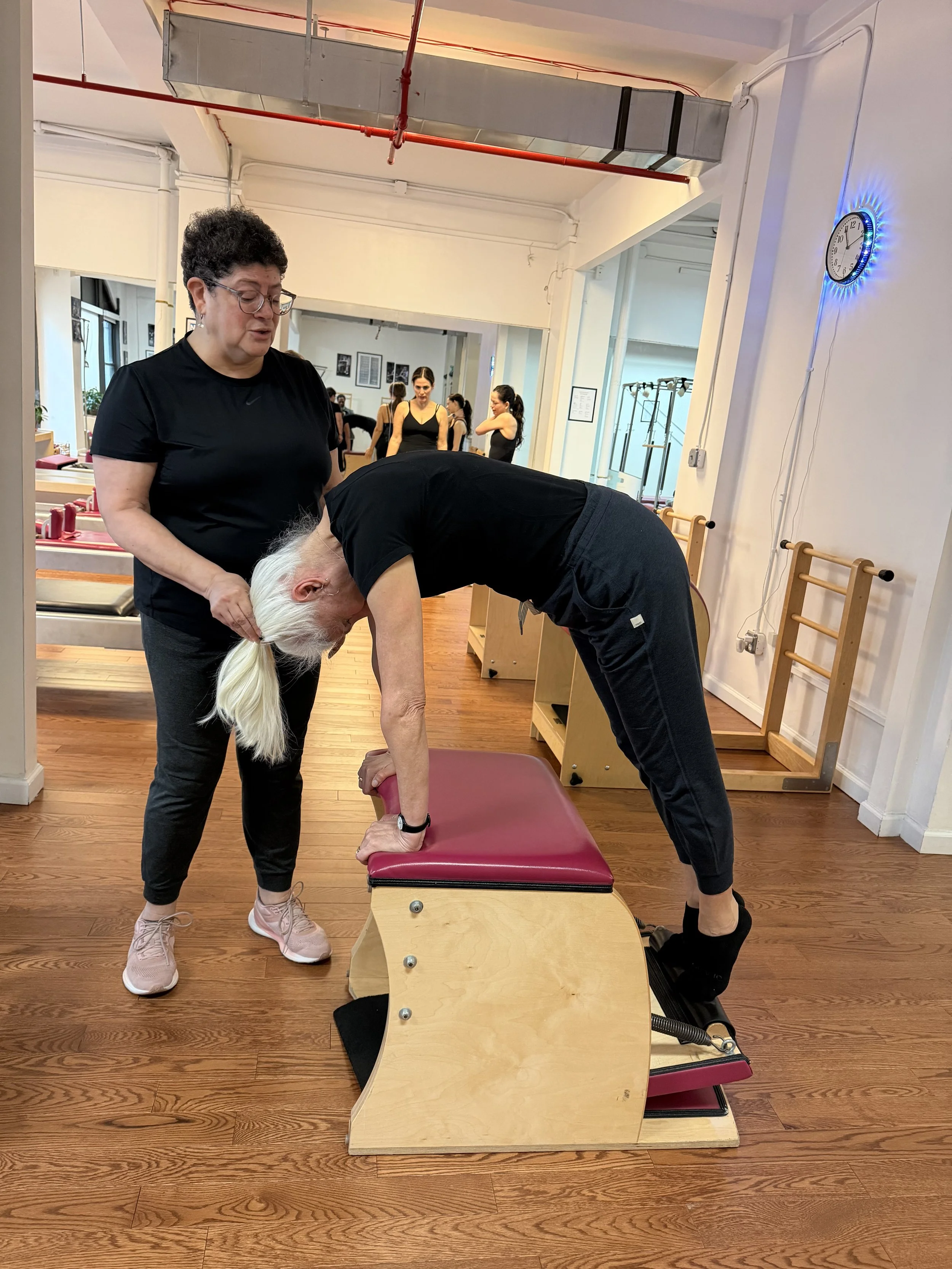
How well can your core hold you steady while your arms and legs move freely? The chair answers that question in real time.
The Wunda Chair was designed by Joseph Pilates as a piece of equipment that could also function as living room furniture. (It didn't quite catch on.) What it became instead is one of the most effective tools in the studio for developing strength, stability, and coordination.
The chair's pedal works against spring resistance, and the exercises performed on it — pressing down, stepping on and off, balancing with one foot — demand that the body stabilize through the torso while one limb works. That relationship between stability and mobility is at the heart of functional strength. How well can your core hold you steady while your arms and legs move freely? The chair answers that question in real time.
It's also a standing apparatus, which makes it uniquely accessible for clients who have difficulty getting onto and off the floor, and uniquely demanding for clients who are ready for a serious challenge.
The Barrels
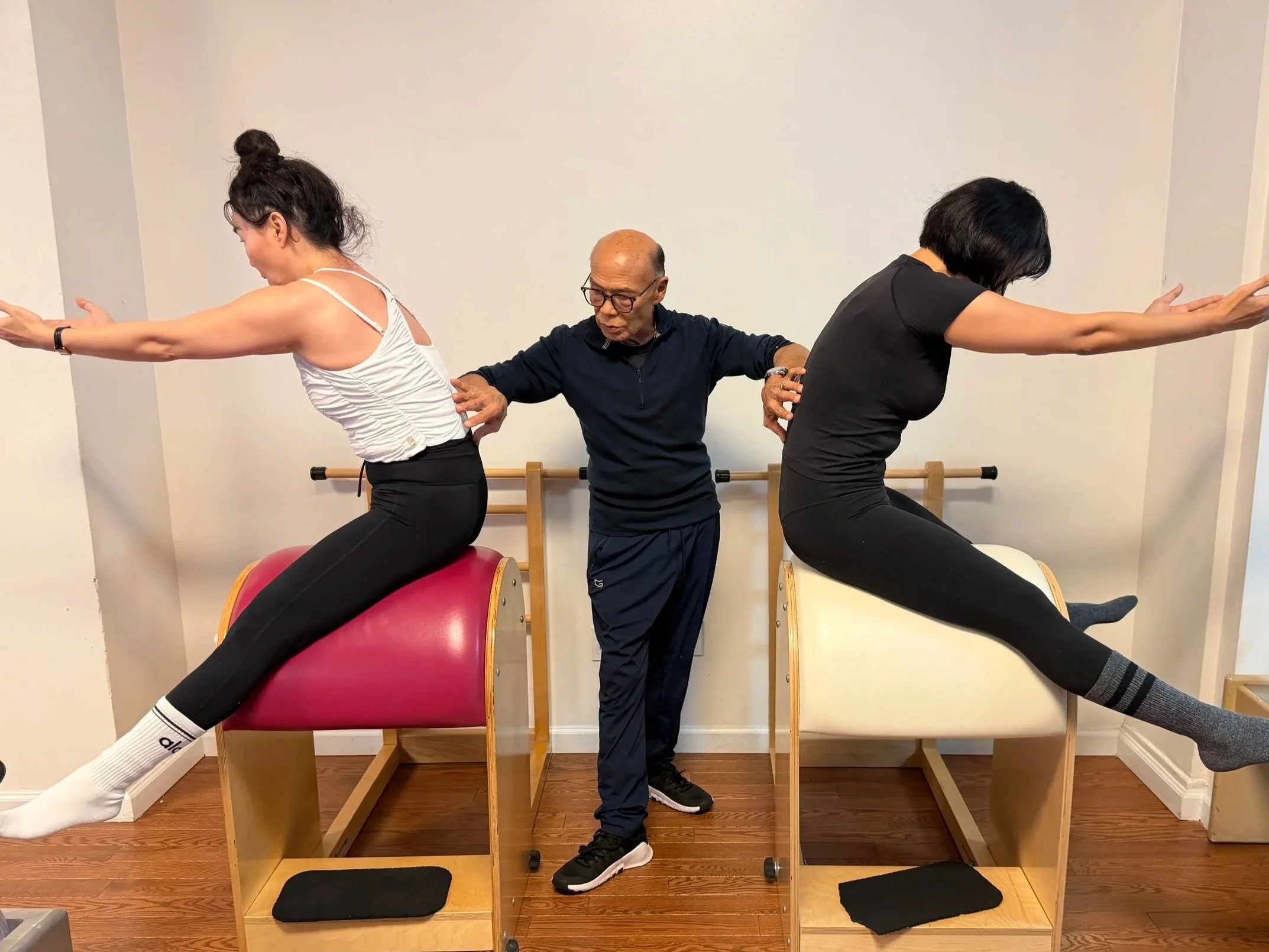
If the reformer is the workhorse of the studio, the barrels are the teachers. They show you, physically, what your spine is capable of.
The barrel family — the spine corrector, the arc barrel, the ladder barrel — exists for one primary purpose: to give the spine room it doesn't have on a flat surface.
Most of us spend the majority of our lives in flexion. We sit with rounded shoulders, we look down at our phones, we curl forward at our desks. The barrels create a supported arc that allows the spine to extend — to open in the opposite direction — without strain. Lying over a spine corrector and simply breathing is one of the most decompressing things you can do for a tired back.
But the barrels aren't passive. They're used for some of the most dynamic and challenging exercises in the repertoire — lateral stretches, hip work, full-body extensions. The arc is a surface, a prop, a resistance point, and a support all at once.
Part 3: Why a Teacher Matters
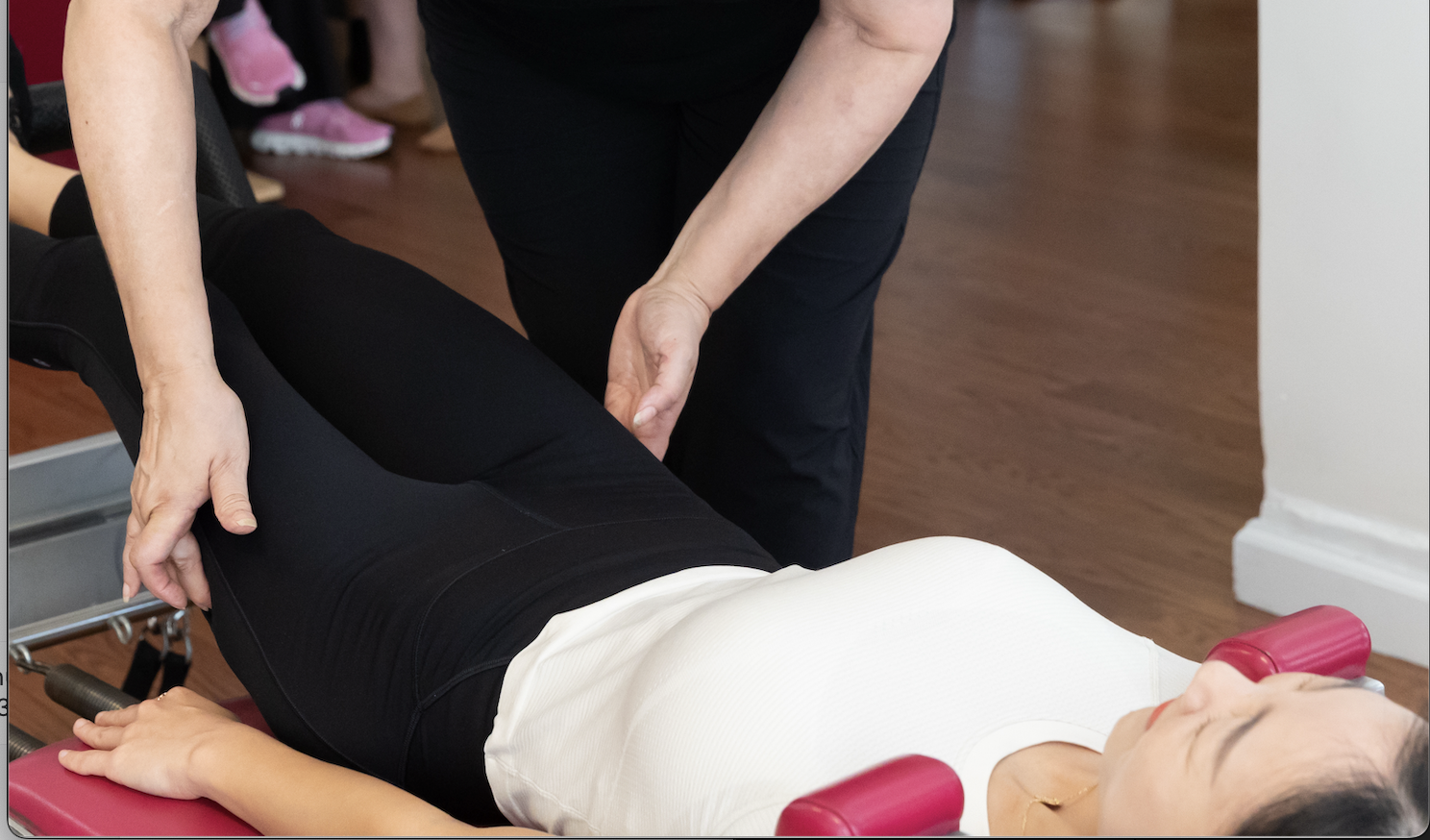
Beyond setup, a skilled Pilates teacher does something that no app, no video, and no diagram can replicate.
Here's something that doesn't get said often enough: Pilates apparatus is not self-explanatory, and it was never meant to be.
The apparatus was designed to be used within a teaching relationship. The springs need to be set to the right resistance for your body and your goal. The footbar needs to be at the right height. The straps need to be the right length. A well-equipped reformer has dozens of possible configurations, and the difference between the right setup and the wrong one isn't subtle — it's the difference between a movement that builds you up and one that reinforces the exact patterns you're trying to change.
Beyond setup, a skilled Pilates teacher does something that no app, no video, and no diagram can replicate: they watch you move, and they see things you can't feel. They see the compensations your body has developed over years of sitting, standing, carrying, and stressing. They see where you're gripping when you shouldn't be, where you're collapsing when you should be strong, where you're holding your breath without knowing it.
And then they do something about it — not by making you feel broken, but by giving you one cue, one adjustment, one modification that shifts the entire experience. Suddenly the movement makes sense in your body. Suddenly you feel what it was supposed to feel like all along.
That moment — and it happens for almost everyone in a private session — is the moment Pilates stops being intimidating and starts being something you want to come back to.
The apparatus doesn't work without that relationship. And that relationship doesn't work without a teacher who knows how to facilitate it.
Part 4: Why the Right First Session Changes Everything
There's a version of a first Pilates session that leaves people feeling confused, lost, and vaguely embarrassed. It usually happens in a group class where no one has assessed their body, no one has explained the equipment, and no one has connected the dots between their specific history and what's happening in the room.
And then there's the other version.
The right first session — a private, one-on-one session with a qualified teacher who asks questions, watches you move, and introduces the apparatus deliberately — leaves people feeling something that surprises them almost every time. Not exhausted. Not overwhelmed. Known.
Known by their body in a way they haven't felt in years. Aware of muscles they forgot they had. Taller, somehow, when they walk out the door.
This isn't marketing language. It's what happens when the apparatus is used the way it was designed — as a tool in the hands of a teacher who understands both the equipment and the person in front of them.
The apparatus is not about what it looks like. It's about what it makes possible. And what it makes possible is a conversation between you and your body — a conversation where, maybe for the first time, your body gets to respond.
A private first session removes every barrier between you and that experience. There's no keeping up with a class. There's no performing. There's just you, the apparatus, and a teacher whose entire focus is on helping you understand both.
That's what makes the first session matter. Not because Pilates only works in private sessions — it doesn't, group work has real value — but because the first session shapes everything that comes after it. It sets the lens through which you understand your own body's patterns. It tells you which apparatus will serve you most. It gives you a foundation you'll come back to every time you step into the studio.
Ready to See What the Apparatus Can Do for You?
You don't need to understand the equipment before you start. You just need a teacher who does.
Our private sessions are designed exactly for this — to introduce you to the apparatus in a way that's personal, unhurried, and specific to your body. Whether you're brand new to Pilates or returning after a long break, your first session is where everything begins.
Book your first private session or explore our intro offer — designed to give you the time and attention to start well.
→ Book Your First Session → View our $299 Intro Offer
We use Gratz Pilates apparatus. The apparatus will still be there when you walk in. But after one good session, it won't look the same.